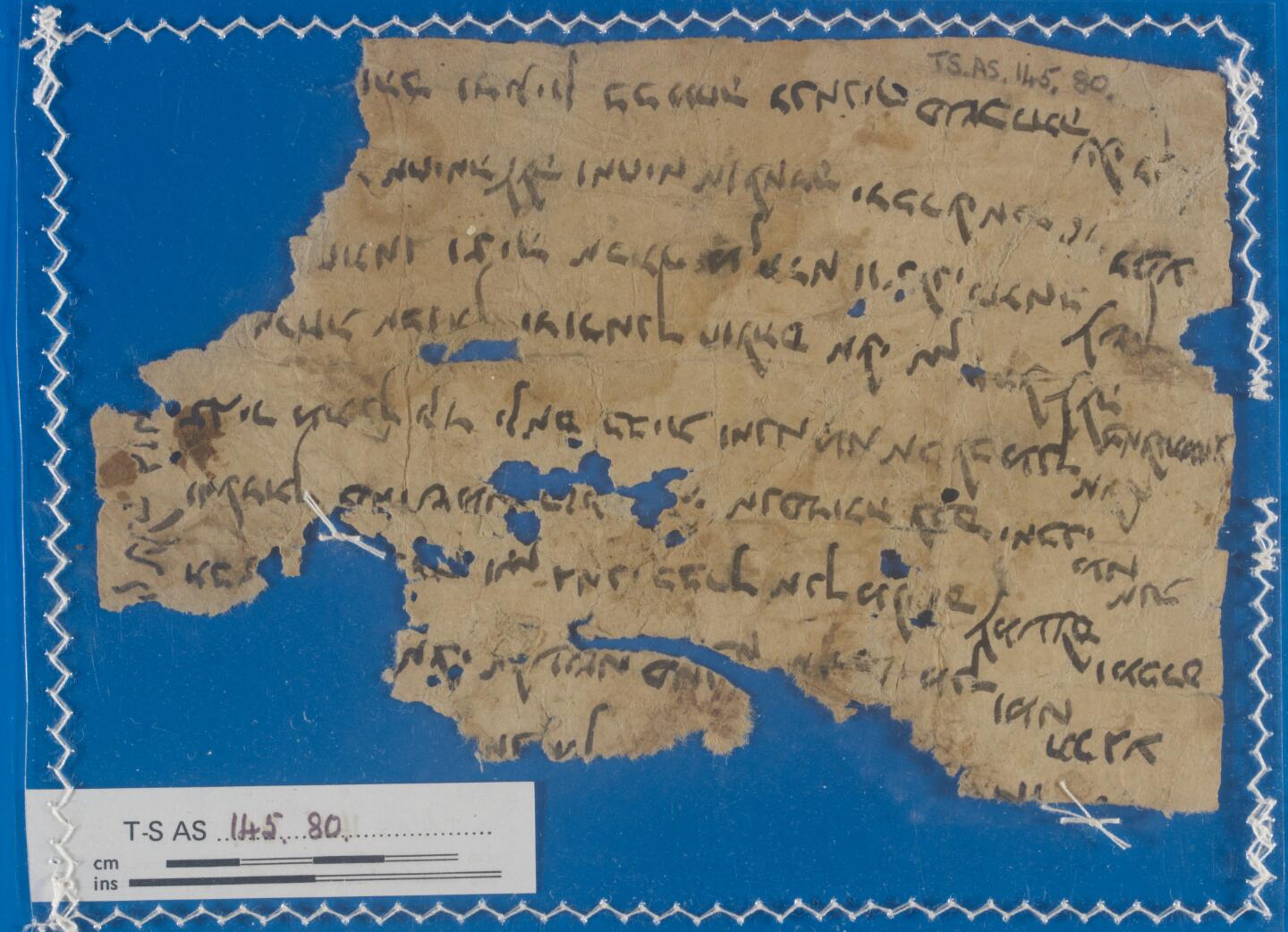
A letter in Judeo-Arabic from a man to a woman concerning the education of his son, who lives with her or is her student. He first thanks her for the care and attention she has given his son, fulfilling his expectations—then he addresses his main disappointment. He has tested his son repeatedly and found that he can neither sing nor read. He expresses his displeasure with this result, especially considering all the kindness and money he has given him (in dirhams and dinars). “What matters most to me is a beautiful melody and correct pronunciation (al-laḥn al-malīḥ al-ṣaḥīḥ wa-l-hijāya). Do not let him mix with young people or walk with them in the street.” The author concludes by demanding that she teach him to sing some beautiful qinnot (?) with the voice of a cantor (qiṭʿatayn qīnā milāḥ bi-laḥn ḥazzānī malīḥ. . . wa-yakūnū min aḥsan qawl wa-aḥsan laḥn). He must be ready to recite them before al-Shaykh al-Kabīr.
Click on an input below and transcribe the matching part of the image.
If you get stuck you can use the buttons above to view the correct answers.
For more tips and assistance please visit the Help section.
תכצ[ר] ואן גאני כברך אנך מלתזם אלמעלם ומכרם
ואלדתך פאיש מא אנפדו בה לכם יא בני מא אנת
צגיר מתלך קד קאם בבית ואנא מא אטלב מנך אלא
מ .]ארחת] אכותך ודוראנך חולהם אלי אן סהל אללה באל{א}גתמאע
ת]חתאג] וציה אכתר מן הדא ווצלני כתאב אלשיך
אחיאה אללה ואחיא אולאדה ידכר לי אנה קד דפע
והם ורצייו בכמסה דנאניר פשכרתה עלי דלך
Draw a rectangle directly on the document image to show the part of the image to transcribe (e.g. draw a rectangle around a character or word).
To begin drawing click in the top left corner of the part and drag your cursor to the bottom right corner of the part. If you make a mistake simply start drawing the rectangle again (the old rectangle will be automatically deleted).